
Machine Vision vs Computer Vision: Which Does Your Factory Actually Need?
Machine vision and computer vision are not the same. See how they differ, where AI changes the answer, and which one your production line actually needs.
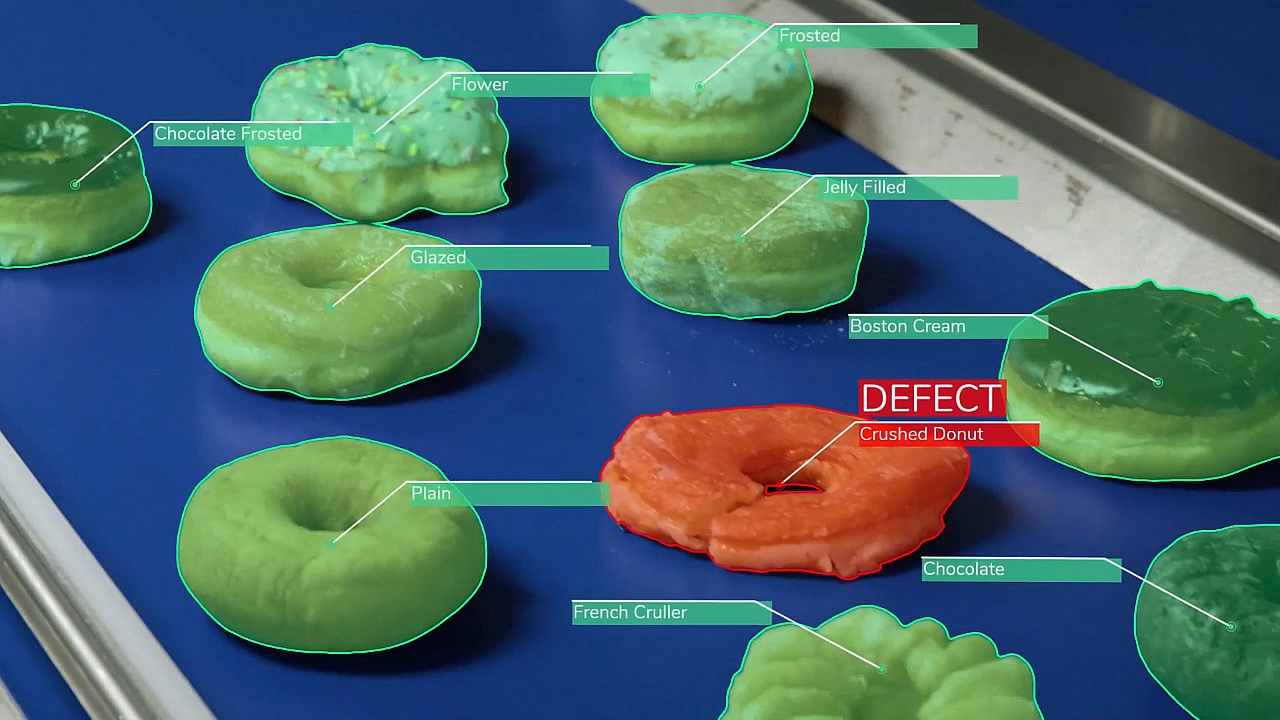
If you’re evaluating inspection technology for your production line, you’ve probably come across the terms machine vision and computer vision. At first glance, they seem interchangeable. In reality, they describe different technologies with different purposes, and understanding the difference can help you choose the right inspection solution for your operation.
For food manufacturers, OEMs, and system integrators, the real question isn’t simply machine vision vs computer vision. It’s which technology will reliably detect defects, improve quality, and integrate into an existing production line without creating unnecessary complexity.
Modern manufacturers face increasing pressure to improve food safety, reduce manual inspection, increase throughput, and maintain consistent quality despite labor shortages and growing product variability. Choosing the right vision technology plays a significant role in meeting those goals.
Traditional machine vision systems continue to perform exceptionally well for repeatable inspection tasks, while AI-powered vision is opening the door to applications that were once considered impossible to automate. Understanding where each technology fits is the key to making the right investment.
This guide explains the difference between machine vision and computer vision, when each technology makes sense, and how AI is changing what manufacturers can automate.
What Machine Vision and Computer Vision Actually Mean
The terms are often used interchangeably, but they describe different parts of the same technology stack.
Computer vision is the broader field of artificial intelligence focused on enabling software to interpret and understand images or video. Computer vision powers applications ranging from facial recognition and autonomous vehicles to medical imaging and retail analytics.
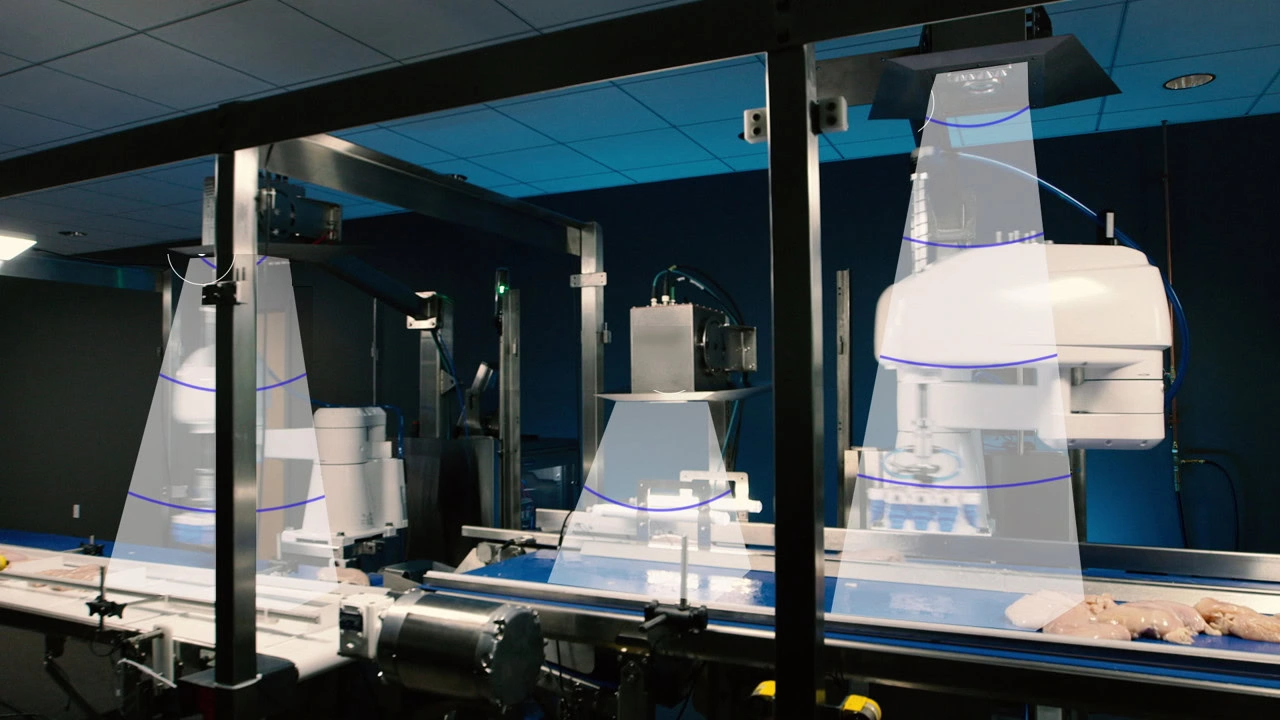
Machine vision, on the other hand, is the practical application of computer vision within industrial environments. A machine vision system combines cameras, optics, lighting, software, and control systems to inspect products, make decisions, and trigger automated actions in real time.
Simply put:
- Computer vision teaches computers how to “see.”
- Machine vision applies that capability to manufacturing.
A typical machine vision system includes:
- Industrial cameras
- Machine vision lighting
- Machine vision lenses
- Image processing software
- Decision logic
- PLC or robot integration
- Reject mechanisms or downstream automation
Together, these components inspect products moving at production speed and determine whether they should pass, be rejected, or be sent for rework.
Unlike general computer vision applications that analyze images after they’re captured, machine vision operates directly on the production line where decisions must be made within milliseconds.
For manufacturers, the distinction matters because you’re rarely purchasing “computer vision.” You’re investing in a complete machine vision solution designed to solve a specific production challenge.
Machine Vision vs Computer Vision at a Glance
| Category | Machine Vision | Computer Vision |
| Primary purpose | Automated industrial inspection and process control | General image understanding and analysis |
| Typical environment | Manufacturing facilities and production lines | Broad AI applications across many industries |
| Hardware | Industrial cameras, lighting, optics, PLCs, robots | Standard cameras or digital images |
| Speed requirement | Real-time decisions at production line speed | Often offline or application dependent |
| Typical output | Pass, fail, rework, robot guidance | Object recognition, segmentation, classification |
| Example on a food line | Detecting foreign material, inspecting seals, guiding robotic picking | AI model identifying food items within an image dataset |
The computer vision vs machine vision debate often creates unnecessary confusion because the technologies work together rather than compete.
Machine vision uses computer vision algorithms as part of a larger industrial system designed specifically for manufacturing.
The real purchasing decision isn’t whether to choose one over the other. It’s deciding which type of machine vision system best fits your application.
Which Do You Need? It Depends on the Application
Not every inspection challenge requires AI.
Many production lines still achieve excellent results using conventional machine vision systems for highly repeatable applications.
The key is understanding where traditional approaches work well and where AI delivers significantly greater value.
Presence, Absence, and Counting
If you’re verifying that a package contains the correct number of products, checking for missing labels, confirming cap presence, or counting components, traditional machine vision systems are often sufficient.
These applications involve clearly defined rules with little product variation, making them ideal for conventional inspection techniques.
Measurement and Gauging
Applications requiring dimensional measurements, spacing verification, or alignment checks also remain well suited for traditional machine vision.
When products are highly repeatable and inspection criteria are fixed, rule-based inspection delivers fast and reliable results.
Foreign Material Detection
This is where inspection becomes more challenging.
Foreign materials often resemble the surrounding product in color, texture, or shape. Contaminants rarely appear exactly the same way twice, making them difficult to detect using predefined inspection rules.
AI-powered vision provides a significant advantage by learning subtle visual characteristics rather than relying on fixed thresholds.
Surface Defect Inspection
Natural products introduce variability that traditional systems struggle to manage.
Bruising on produce, coating inconsistencies, cracks, tears, discoloration, and other cosmetic defects vary from product to product.
Rather than programming hundreds of inspection rules, AI learns what acceptable and defective products look like across many scenarios, resulting in more reliable automated inspection.
Vision-Guided Robotics
Modern food processing increasingly relies on robotic automation for picking, sorting, and packaging.
Applications involving randomly oriented products, overlapping items, or inconsistent product presentation benefit from AI-powered vision-guided robotic picking, enabling robots to locate and manipulate products accurately in real time.
As robotic automation expands across manufacturing, AI vision becomes the intelligence layer that allows robots to adapt to real production environments rather than perfectly controlled ones.
Where AI Changes the Answer
Traditional machine vision works exceptionally well when every product looks nearly identical.
Food manufacturing rarely provides that consistency.
Raw produce naturally varies in size, color, texture, and shape. Proteins differ from one cut to the next. Battered products, baked goods, and prepared meals all exhibit natural variation that makes fixed inspection rules increasingly difficult to maintain.
This is where AI machine vision changes the equation.
Instead of asking engineers to define every possible defect, AI learns patterns from examples and identifies acceptable variation while still detecting defects that require action.
As production environments become more dynamic and product portfolios continue expanding, AI enables manufacturers to automate inspections that previously depended on large manual inspection teams.
According to the 2025 AI in Manufacturing survey, 77% of manufacturers now report using AI in some capacity, demonstrating the rapid adoption of intelligent automation across industrial operations.
Market trends tell the same story.
MarketsandMarkets projects the global machine vision market will grow from USD 15.83 billion in 2025 to USD 23.63 billion by 2030, while identifying AI-based machine vision software as the fastest-growing component of the market.
Rather than replacing traditional machine vision, AI expands what manufacturers can automate, making complex inspection applications practical for the first time.
How V-CORTX Brings AI Machine Vision to the Production Line
While AI has transformed what’s possible in manufacturing, many companies still assume deploying an AI vision system requires months of image collection, extensive data labeling, and a team of AI specialists.
That’s no longer the case.
V-CORTX is Oxipital AI’s industrial AI vision platform, designed specifically for manufacturers looking to automate complex visual inspection without the complexity traditionally associated with AI deployment.
Instead of building custom AI models from scratch, V-CORTX combines proprietary Synthetic Data Generation, no-code tools, centralized model management, and production analytics into a single platform that helps manufacturers deploy AI inspection faster and with less engineering effort.
Whether you’re inspecting food products, guiding robots, or classifying products for pass, rework, or scrap, V-CORTX provides a scalable platform that integrates into existing production environments with minimal disruption.
Proprietary Synthetic Data Generation
One of the biggest obstacles to deploying AI inspection is obtaining enough real production images.
Traditional AI projects often require manufacturers to collect thousands—or even tens of thousands—of defect images before a model can be trained accurately. Rare defects, such as foreign materials or broken components, may occur so infrequently that gathering enough examples can take months.
V-CORTX removes this bottleneck through proprietary Synthetic Data Generation.
Instead of relying solely on production images, realistic synthetic images are generated to train AI models before large real-world datasets exist. This dramatically reduces the need for manual image collection and accelerates deployment timelines.
For manufacturers, this means:
- Faster proof of concepts
- Reduced engineering effort
- No large image collection projects
- Faster production deployment
- Lower implementation costs
No-Code Recipe Builder
Many manufacturers hesitate to adopt AI because they assume every inspection change requires software development.
V-CORTX’s Recipe Builder removes that barrier.
The intuitive no-code interface allows quality engineers and plant personnel to create, update, and optimize inspection recipes without programming or manually labeling images.
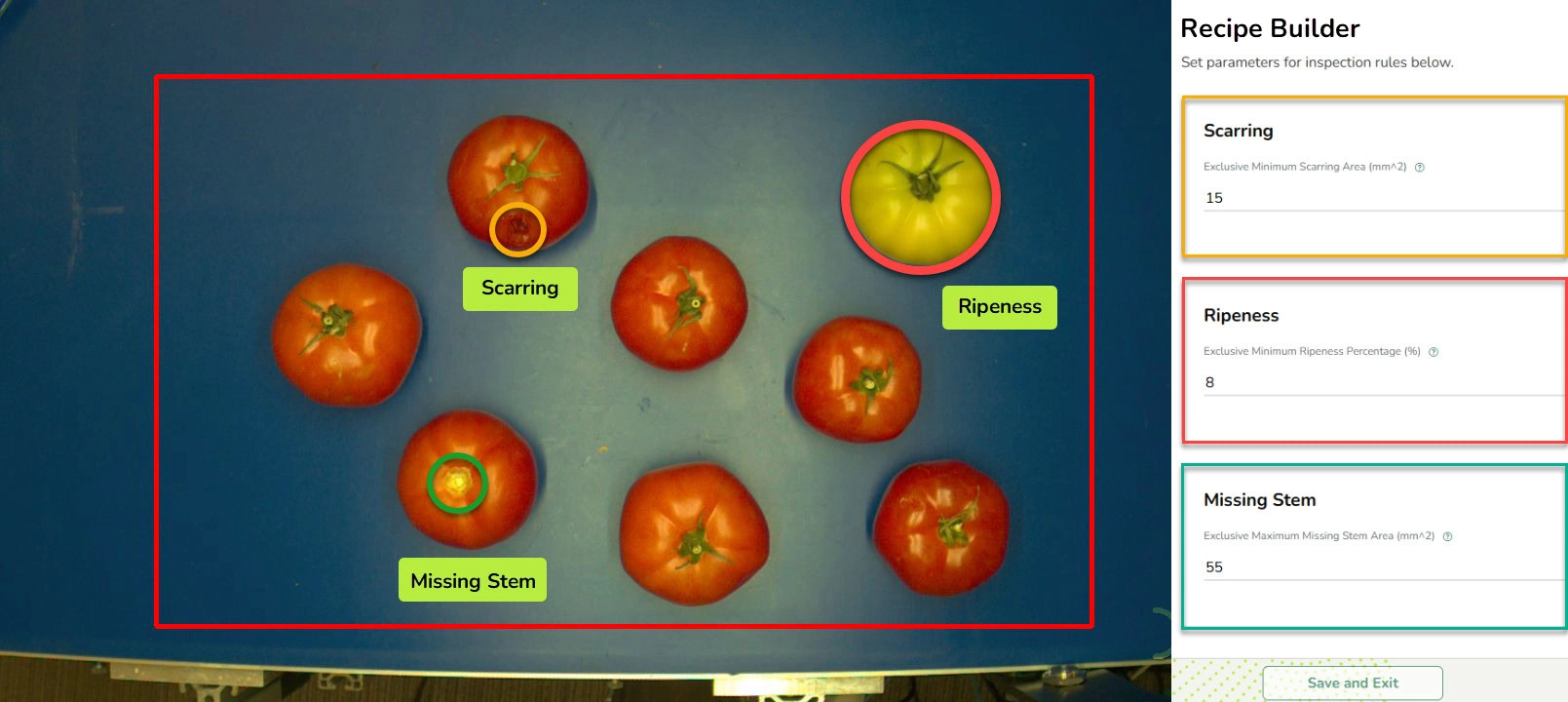
Whether introducing a new SKU, adjusting inspection tolerances, or expanding to another production line, manufacturers can adapt inspection workflows quickly without waiting for outside developers.
This flexibility significantly reduces changeover time while making AI inspection accessible to the people who understand the manufacturing process best.
Model Manager
As AI deployments grow across multiple production lines or facilities, managing inspection models becomes increasingly important.
The Model Manager provides a centralized platform for deploying, monitoring, updating, and managing Visual AI models throughout the organization.
Manufacturers can maintain consistent inspection performance while continuously improving models as products, packaging, and production requirements evolve.
Instead of treating every new application as a separate AI project, organizations gain a scalable framework for expanding Visual AI inspection across their operations.
Analytics Dashboard
Every inspection generates valuable production data.
The Analytics Dashboard transforms that information into actionable insights, allowing manufacturers to monitor defect trends, reject rates, shift performance, historical quality data, and recurring production issues.
Rather than simply identifying defective products, manufacturers gain visibility into why defects occur.
Questions such as:
- Are defects increasing on a specific production line?
- Which suppliers consistently deliver higher-quality raw materials?
- Are process adjustments reducing reject rates?
- Which shifts experience the greatest quality variation?
Can all be answered using inspection data collected automatically during production.
These insights support continuous improvement initiatives while helping manufacturers reduce waste, improve yield, and strengthen quality management.
The Business Benefits of AI Machine Vision
Whether implementing automated visual inspection for the first time or expanding existing automation, manufacturers typically realize value across multiple areas of the business.
Higher Product Quality
Every product is inspected consistently using the same criteria, reducing variability introduced by manual inspection while improving overall product consistency.
Improved Food Safety
Automated detection of foreign materials, contamination, packaging defects, and other quality issues helps reduce the risk of recalls while strengthening consumer confidence.
Reduced Labor Costs
Instead of expanding manual inspection teams as production grows, manufacturers automate repetitive inspection tasks and allow employees to focus on higher-value operational activities.
Better Yield
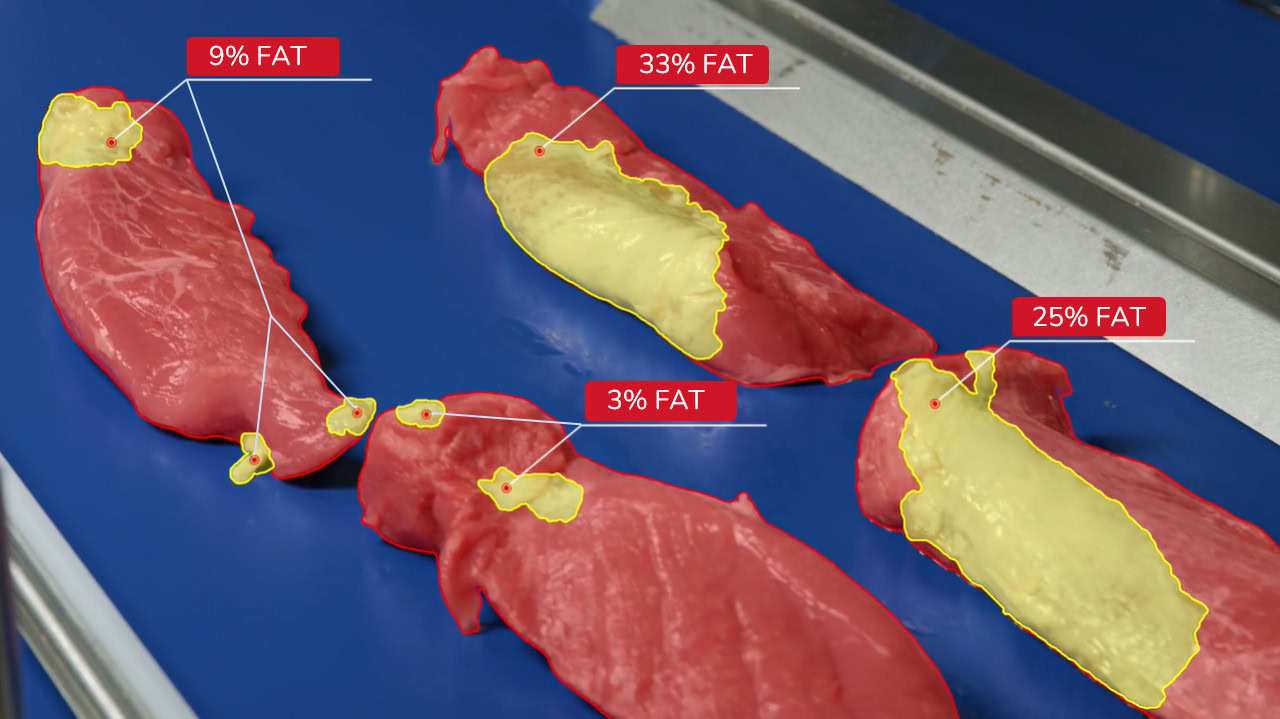
AI enables more accurate product classification, ensuring products suitable for rework are recovered while defective products are removed before reaching customers.
Faster Return on Investment
Reducing labor costs, improving yield, minimizing waste, lowering recall risk, and increasing production efficiency all contribute to a compelling return on investment.
Many manufacturers find that AI inspection delivers value across multiple operational metrics simultaneously rather than solving a single quality challenge.
Choosing the Right Vision Technology
The question isn’t whether machine vision or computer vision is better.
The real question is whether your inspection application requires traditional rule-based inspection or the adaptability of AI.
For highly repeatable inspections involving simple pass/fail decisions, conventional machine vision remains an effective solution.
For applications involving natural product variation, subtle defects, foreign material detection, robotic guidance, or rapidly changing production environments, AI-powered vision offers capabilities that traditional systems struggle to achieve.
As manufacturing continues evolving toward greater automation, AI is becoming an essential component of modern quality control.
Manufacturers investing today aren’t simply purchasing another inspection camera—they’re implementing intelligent vision systems that improve quality, support food safety, reduce costs, and enable smarter manufacturing decisions.
Ready to Modernize Your Inspection Process?
Whether you’re evaluating your first machine vision system or looking to expand into AI-powered inspection, choosing the right platform can dramatically improve quality, operational efficiency, and long-term scalability.
Explore V-CORTX, learn how Synthetic Data Generation accelerates deployment, or contact the Oxipital AI team to discuss your inspection application and discover how Visual AI can fit into your existing production environment.
Frequently Asked Questions
Computer vision is the broader field of AI that enables computers to interpret images. Machine vision applies computer vision within industrial environments to automate inspection, quality control, measurement, and robotic guidance.
No. Traditional machine vision remains effective for repeatable applications with clearly defined inspection rules. AI expands what manufacturers can automate by handling complex applications involving product variability and subtle defects.
Machine vision is widely used across food processing, packaging, automotive, pharmaceuticals, consumer goods, electronics, logistics, and advanced manufacturing.
Yes. Modern AI vision systems perform real-time inline inspection, allowing manufacturers to inspect every product without reducing throughput.
Synthetic Data Generation creates realistic training images that allow AI inspection models to be developed without requiring manufacturers to collect and manually label thousands of production images.
V-CORTX is designed to integrate with existing cameras, conveyors, PLCs, robots, and production control systems, enabling manufacturers to add AI-powered inspection without redesigning their production lines.