
The True Cost of Manual QA: How AI Vision Saves Manufacturers Millions Annually
Manual inspection remains the default approach to quality assurance, but scaling labor to manage risk often leads to millions in added costs without solving consistency or accuracy challenges. As production demands increase, the limitations of manual QA become more apparent. AI-powered visual inspection offers a more scalable, cost-effective alternative. Read how.
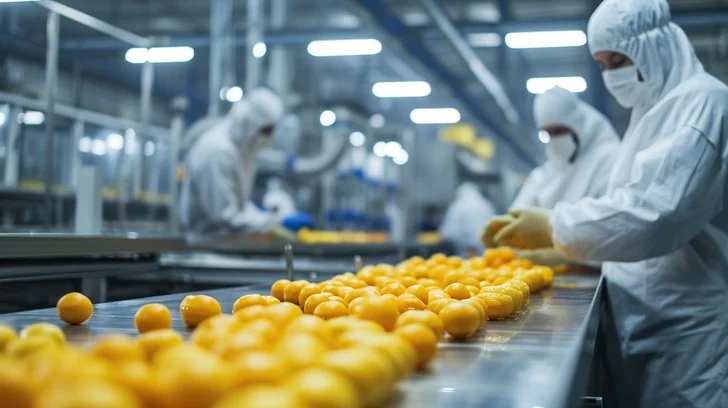
For many manufacturers, quality assurance still relies heavily on manual inspection. When a risk of defect emerges, whether from a recall, new product line, or stricter quality standards, the most common response is simple: add more people to inspect the line.
But that approach comes with a hidden price tag.
Adding multiple operators for manual inspection can quickly cost millions of dollars annually once wages, training, turnover, and operational inefficiencies are factored in. Even then, manual QA struggles to deliver the consistency, speed, and accuracy that modern production environments require.
As production volumes grow and margins tighten, manufacturers are discovering that the true cost of manual quality assurance is far higher than expected.
AI-powered visual inspection is changing that equation.
The Hidden Cost of Manual Inspection
Manual inspection sounds straightforward: place trained operators along the production line to visually identify defects and remove bad product. In reality, the model is difficult to sustain.
Human inspectors must monitor the same product stream for hours at a time, often in situations where most products are good, flow by the operator quite fast and at large volumes making it a near impossibility for human perception. Maintaining attention under these conditions is extremely challenging. Fatigue sets in, focus drifts, and subtle defects can easily go unnoticed.
To compensate, companies often increase headcounts. But scaling labor creates new challenges:

- Rising operational costs
- High turnover and training requirements
- Inconsistent inspection results
- Slower production speeds
- Continued risk of recalls or product waste
In some facilities, entire teams of operators are dedicated solely to inspection. Yet even with significant labor investment, quality risks remain and the company still does not know the classification of the defects or why they were caused.
This is where AI-powered visual inspection can fundamentally change the economics of quality assurance by giving manufacturers clear, classified defect data that drives actionable upstream process improvements.
A Different Approach: Visual AI with V-CORTX
V-CORTX allows manufacturers to automate complex inspection tasks that once required large teams of operators.
Unlike traditional machine vision systems which depend on rigid rules and extensive engineering, V-CORTX uses advanced AI models capable of managing natural product variability.
Equally important, the platform eliminates another hidden cost of AI deployment: data labeling.
Many AI vision solutions require thousands of manually labeled images to train inspection models. Gathering and annotating this data often demands weeks or months of effort from engineers and domain experts.
V-CORTX removes this barrier entirely. Models can be developed without manual labeling, coding, or annotation, allowing manufacturers to move from concept to deployment in a fraction of the time required by traditional approaches.
The result is faster deployment, lower implementation costs, and faster time to ROI.
Real-World Impact: From Recalls to Rapid ROI
Across multiple deployments, manufacturers implementing Visual AI inspection have seen measurable financial impact in a short period of time. In environments where companies previously relied on 30–60 operators performing manual inspection, AI Vision systems have helped eliminate millions in recurring labor costs while maintaining consistent inspection performance at full production speed.
Beyond labor reduction, manufacturers are also realizing additional ROI through improved yield, more accurate defect classification, and reduced product waste. Automated inspection allows facilities to make better decisions about whether products should move forward, be reworked, or be removed protecting valuable product that might otherwise be unnecessarily scrapped.
These improvements compound quickly. Lower labor costs, higher yield, and reduced quality risk often enable manufacturers to see payback within months rather than years, while also creating a more stable and scalable quality assurance process.
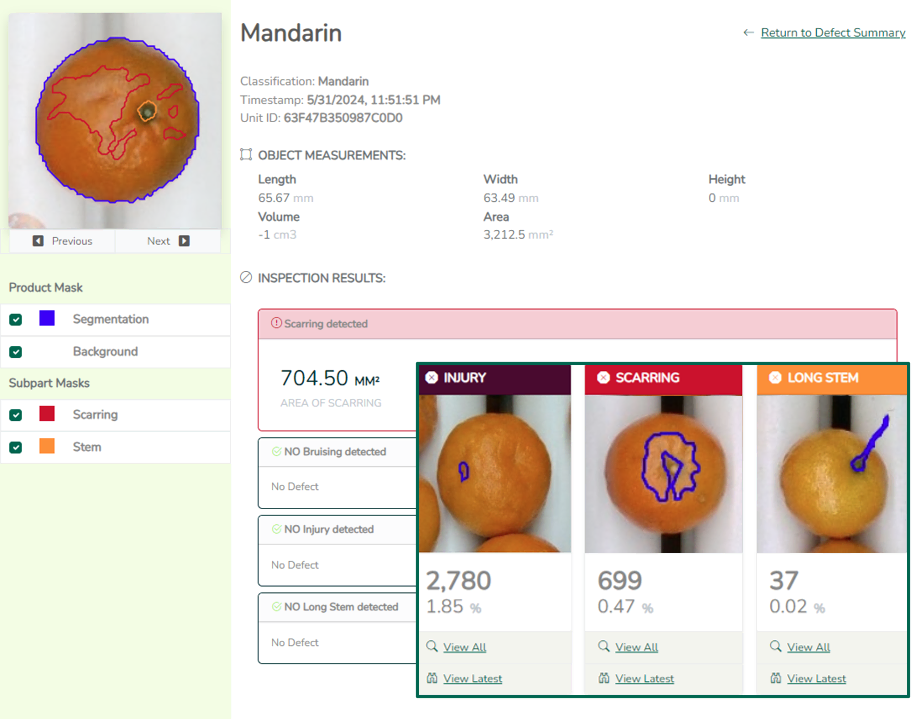
Proven Across Food Manufacturing
Visual AI inspection is no longer experimental. Today, solutions like V-CORTX are being deployed across multiple food manufacturing segments to solve complex inspection challenges.
Applications include:

- Detecting foreign material or structural defects
- Identifying raw produce defects
- Inspecting coated or battered products
- Sorting product for rework or scrap
- Preventing quality escapes that lead to recalls
In many cases, there are inspection problems that traditional vision systems could not solve or that require large manual inspection teams to manage.
The Future of Quality Assurance
Manual inspection will always play a role in manufacturing. But as production volumes grow and labor costs rise, relying on large inspection teams is becoming increasingly unsustainable.
AI Vision solution offers a different path forward one where manufacturers can reduce costs, improve quality, and deploy inspection systems faster than ever before.
By eliminating the need for manual labeling, enabling rapid model development, and delivering reliable performance in complex environments, V-CORTX is helping manufacturers turn quality assurance from a cost center into a competitive advantage.
For manufacturers still relying on manual inspection teams of dozens of operators, the question is no longer whether AI vision can work.
It’s how much value is left on the table by not deploying it yet.