
From Farm to Pack: AI Revolutionizes Produce Processing
Discover how produce growers and manufacturers are leveraging AI to enhance quality control and drive process improvements. In an industry where both appearance and quality are paramount, embracing AI is no longer optional – it’s essential for staying ahead in a market where customers expect nothing short of perfection. Read full story below.
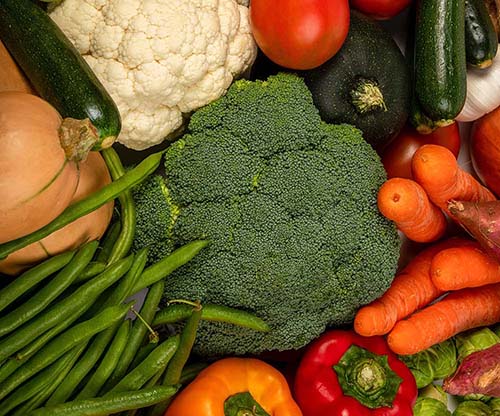
Defect Detection in Produce: AI that safeguards freshness and elevates quality.
In today’s fast-paced food industry, consistency, quality, and efficiency aren’t just goals, they’re requirements. For produce processors, ensuring every ear of corn, apple, or head of lettuce meets strict quality standards can be the difference between a happy buyer and a rejected shipment.
Detecting defects like bruises, discoloration, rot, or shape deformities isn’t easy, especially when relying on manual inspection. Human inspectors can only evaluate so many items at once, and fatigue or inconsistency can lead to defects slipping through. This is where artificial intelligence (AI) is transforming the game. By combining advanced visual recognition with real-time analytics, AI helps produce manufacturers and growers detect defects more accurately, consistently, and efficiently than ever before. What was once a labor-intensive, error-prone process is now being revolutionized by visual AI that never tires.

According to Global Market Insights (GMI) the fresh vegetable market size valued at $949.8 billion in 2024 is expected to reach $1.6 trillion by 2034.
The Challenge: Ensuring Reliable, High-Throughput Quality Control
Manual inspection often falls short, especially when processors are handling thousands of products per minute. Even in highly automated packing and processing facilities, quality inspection remains a significant challenge.
Common produce defects include:
- Bruising or surface damage
- Discoloration or rot
- Misshapen or undersized pieces
- Foreign material or contamination
- Uneven color, ripeness, or texture
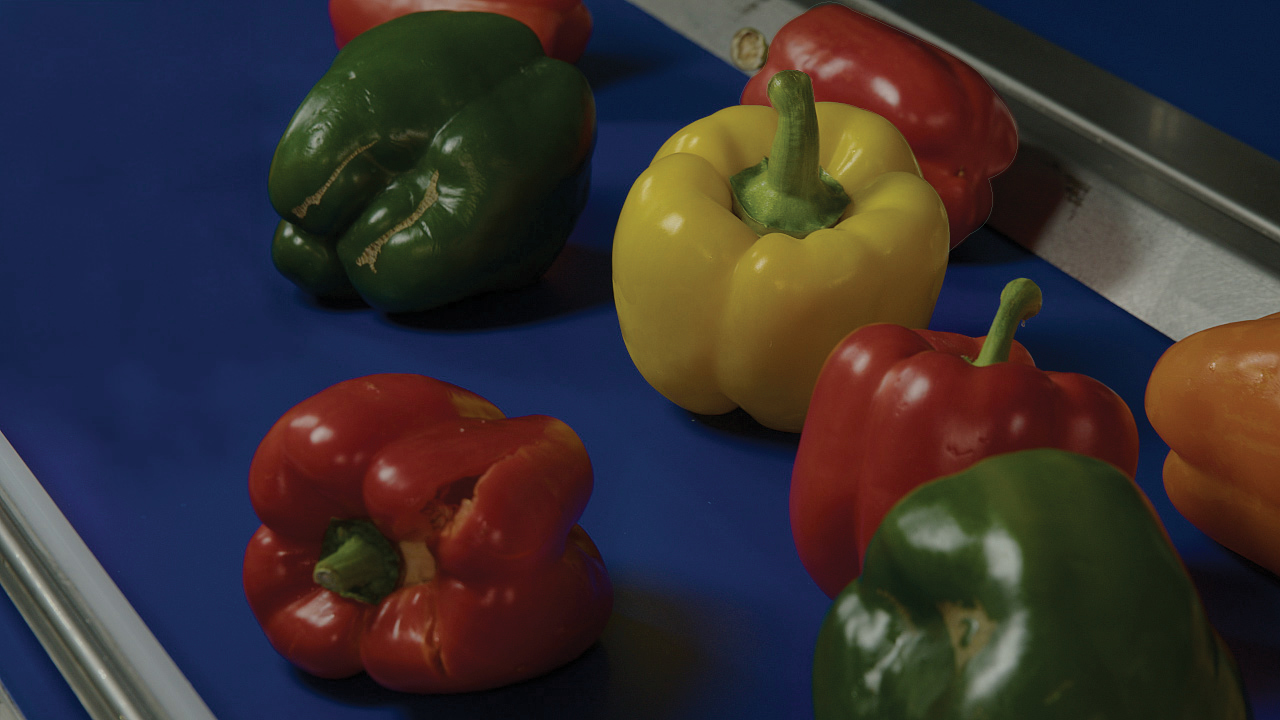
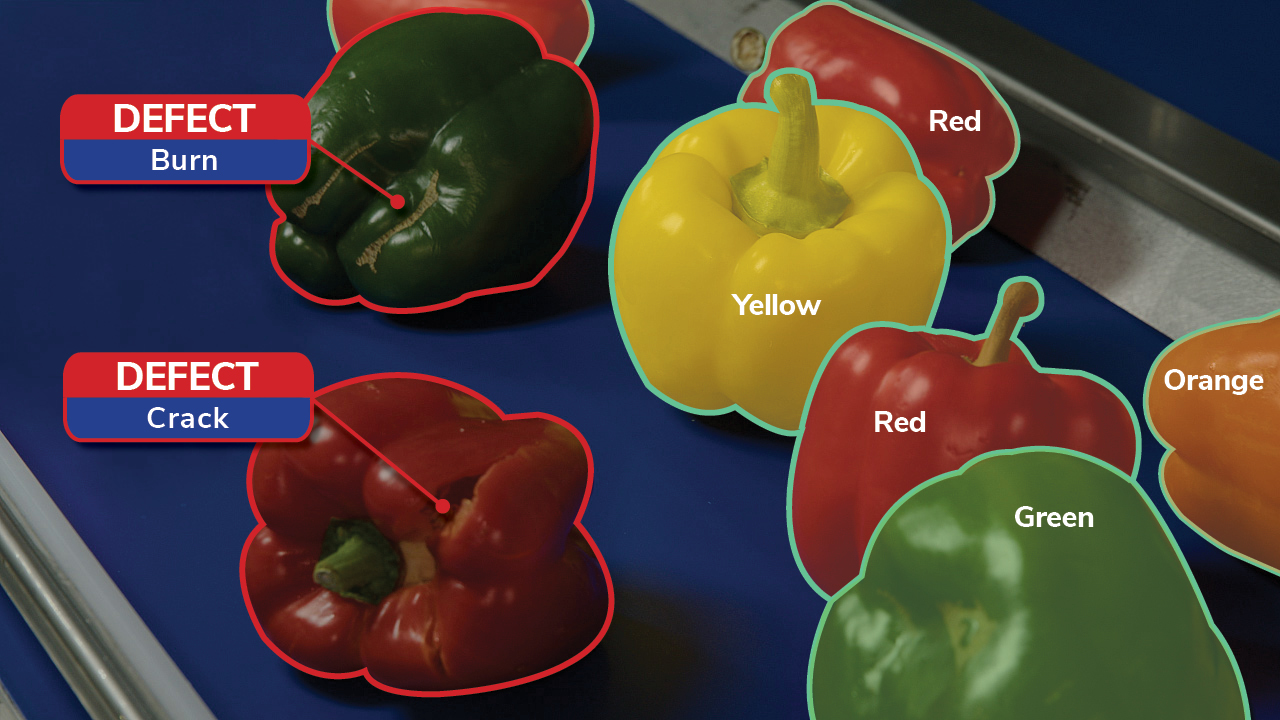
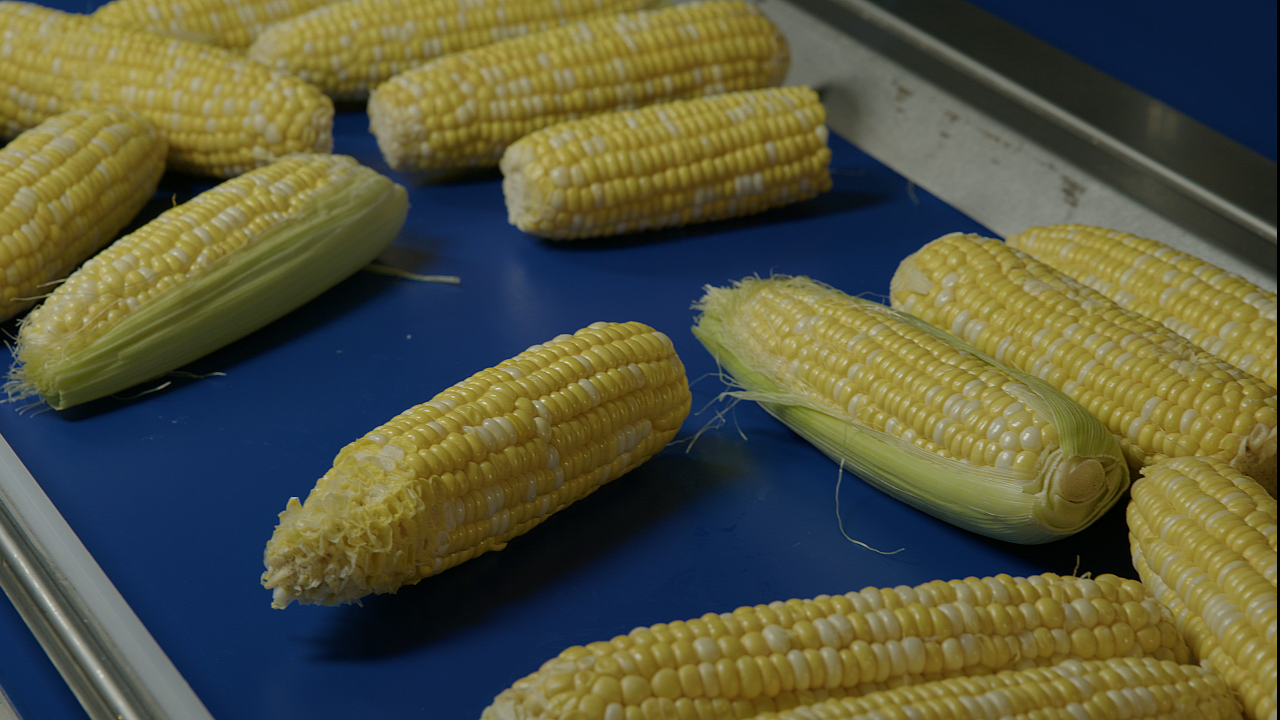
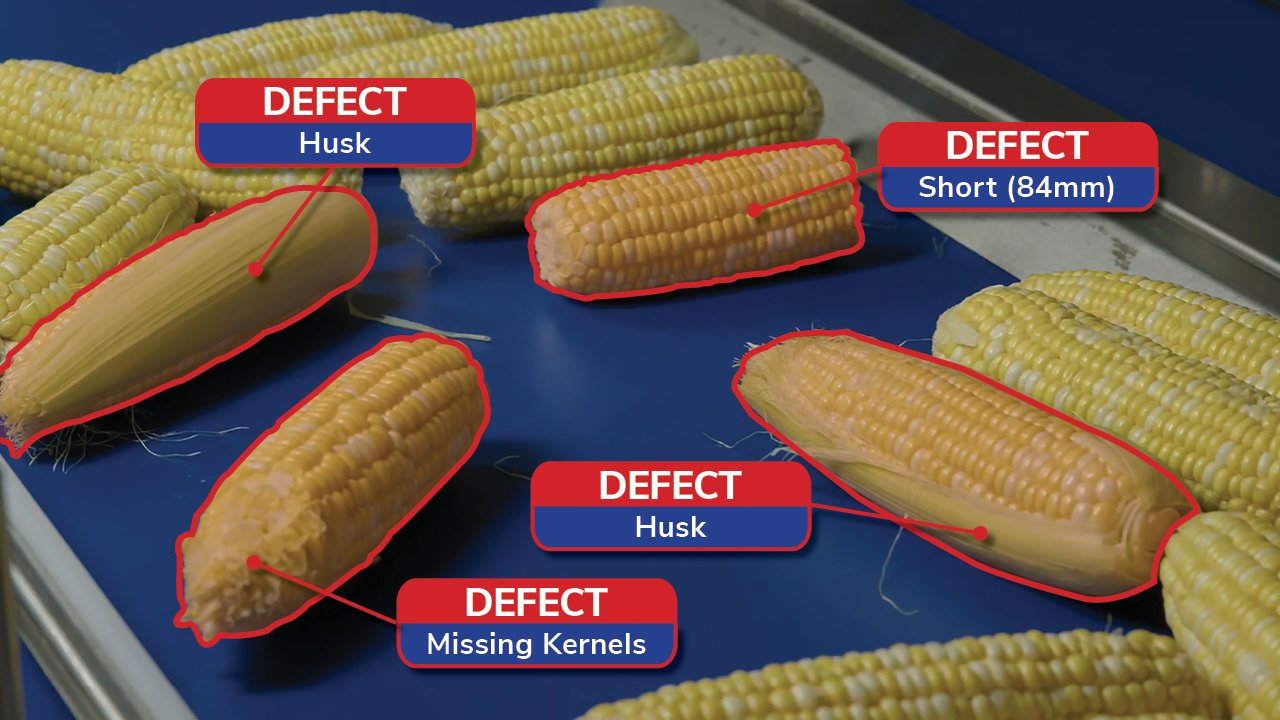
Inspection comparison slider
When it comes to buying food, shoppers make decisions with their eyes long before they even read a label. Take corn, for example. If one ear in the pack is defective, maybe there’s some husk still attached, or a few kernels are missing or starting to rot at the tip, most people will put the entire pack back on the shelf. That single imperfect ear can turn a $7 sale into a complete loss. And when this happens at scale, those small decisions add up to significant revenue losses for both the manufacturer and the grocer.
Enter V-CORTX AI Platform: A Smarter Way to Detect Defects
V-CORTX, the all-in-one AI vision platform from Oxipial AI, is redefining what manufacturers can expect from automated inspection. Built for simplicity, V-CORTX, delivers unmatched speed, precision, and reliability, far beyond what manual inspection and other solutions can achieve.
Here’s how V-CORTX works:

Model Manager: Models are trained using synthetic data which means no image collection, no labeling, and no data gathering is required.
Recipe Builder: A no-code application builder empowers users to design and update AI vision applications with real-time feedback and full visual transparency.

Analytics Dashboard: Live monitoring creates a digital record of every product running through the process, providing quality insights early before issues become costly.
Key Benefits of AI in Produce Defect Detection
AI-powered quality control delivers a wide range of benefits to produce growers and processors, from large-scale industrial operations to smaller automated facilities:
1. Improved Product Quality
AI systems, like V-CORTX, ensure consistent quality and protect brand reputation across every shipment.
2. Reduced Waste
By identifying defects early and accurately, produce growers and manufacturers can reduce the number of unsellable products and minimize waste of resources.
3. Increased Efficiency
Automated inspection runs continuously, without fatigue or slowdowns, keeping production lines moving at full capacity.
4. Lower Costs Over Time
With Oxipital AI’s V-CORTX AI platform, plants can go from setup to full operation in days, not months. The long-term savings come from reduced labor needs, higher yield, and fewer returns or recalls.
5. Data-Driven Insights
Each inspection generates valuable data. Over time, these insights help processors spot recurring issues, like bruising from handling, or defects tied to supplier batches and make informed improvements upstream.
6. Job Satisfaction
By taking over routine work, AI allows employees to contribute to more meaningful, high-value tasks, improving morale, job satisfaction, and engagement.
Conclusion
AI is reshaping how the produce industry approaches quality control. By automating inspection and delivering data-driven accuracy, AI helps processors ensure their products meet the highest quality standards—while improving yield, efficiency, and consistency.
With Oxipital AI’s V-CORTX AI platform, plant managers, quality leaders, and operators can easily manage inspection workflows without needing programming experience. The platform’s intuitive interface makes it simple to train models, deploy updates, and maintain operations.
In an industry where appearance, freshness, and quality drive every sale, embracing AI isn’t just an upgrade; it’s quickly becoming essential for staying competitive in a market that demands perfection.