
Food Safety Is No Longer Optional: How AI Vision Is Setting a New Standard
Food safety is becoming a top priority across the industry, with the USDA pushing for greater adoption of AI and automation. Traditional manual inspection methods struggle with consistency, labor challenges, and hard-to-detect defects. Visual AI Solutions like V-CORTX enable manufacturers to improve safety, reduce recalls, increase yield, and gain real-time insights, turning food safety into…
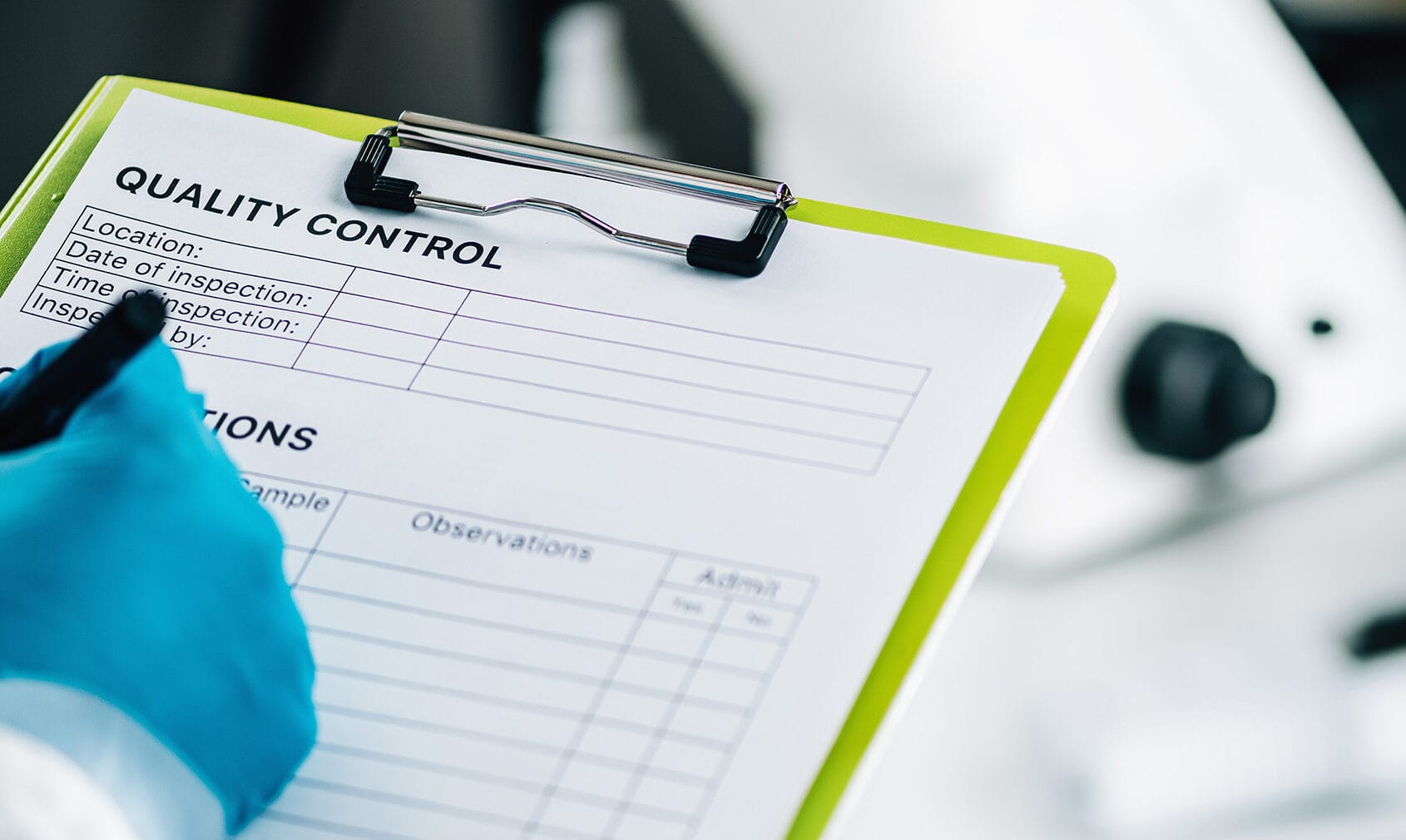
Food safety has always been critical, but today, it’s under more scrutiny than ever.
In a recent announcement, the United States Department of Agriculture (USDA) emphasized the need to modernize how food safety is ensured across the supply chain, introducing a new initiative to strengthen innovation and resilience in U.S. agriculture. As highlighted in the announcement, the goal is to “accelerate the adoption of emerging technologies especially digital and AI-driven technologies” to better protect food systems and prevent risk before it reaches consumers.
The message is clear: food safety is moving toward automation, data, and AI.
For manufacturers, this shift presents both a challenge and an opportunity.
The reality of food safety on the production floor
Ensuring food safety at scale is incredibly difficult. Production lines move fast, products vary naturally, and defects are often subtle or hidden.
At the same time, many facilities still rely heavily on manual inspection, which introduces real risk:
- Fatigue and inattention when operators monitor repetitive processes
- Human variability in identifying defects
- Sick or understaffed labor, impacting consistency
- Hard-to-detect defects that are nearly invisible to the human eye
- Introduction of Foreign Materials (e.g. gloves, by product, etc.)
Even with large inspection teams, defects can slip through, leading to recalls, waste, and reputational damage.
Why Visual AI is becoming essential
This is exactly where AI-powered visual inspection is transforming food safety.
With V-CORTX, manufacturers can deploy Visual AI models that continuously inspect products at line speed, without fatigue, inconsistency, or missed defects. In just 1.5 years, V-CORTX systems have identified over 500 million defects across production environments, helping manufacturers prevent issues before they escalate.
The impact goes beyond detection:
- Reduced recall risk
- Improved yield through better classification
- Consistent quality at scale
- Lower reliance on manual labor
When food safety improves, so does the bottom line, through fewer losses, higher efficiency, and stronger brand trust.
Built for real-world manufacturing
V-CORTX is designed to work in the environments where traditional systems fail, handling variability in product, lighting, and production conditions without requiring manual coding or data labeling. It also provides manufacturers with tools that go beyond inspection:
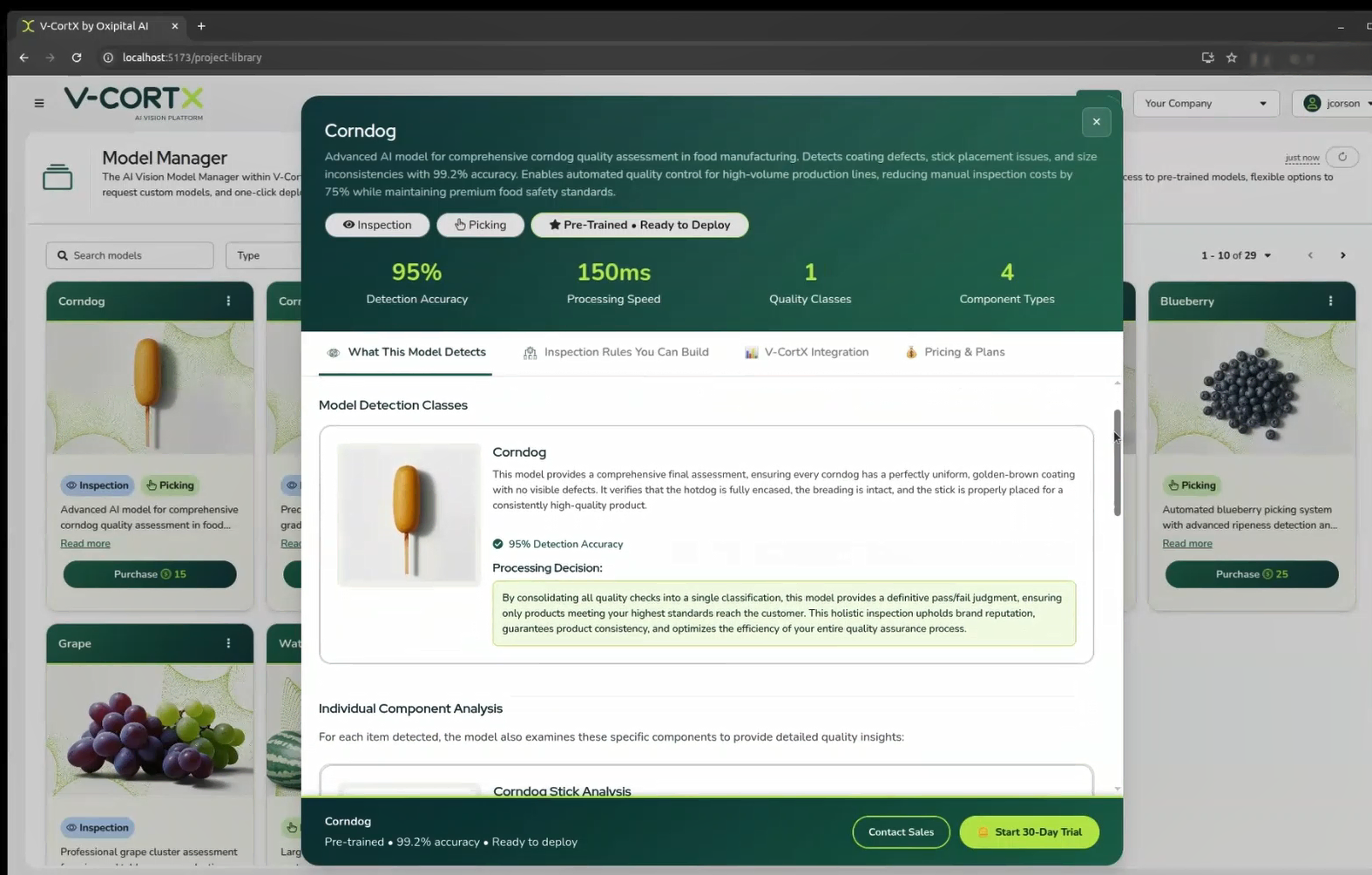
Model Manager
Easily deploy, update, and manage AI models across production lines. As products or conditions change, models can be adjusted within days, without lengthy redevelopment cycles.
Recipe Builder
Define inspection criteria and decision logic for different products or SKUs. This allows teams to quickly adapt to inspection processes while maintaining consistency and control, all without writing a single line of code.
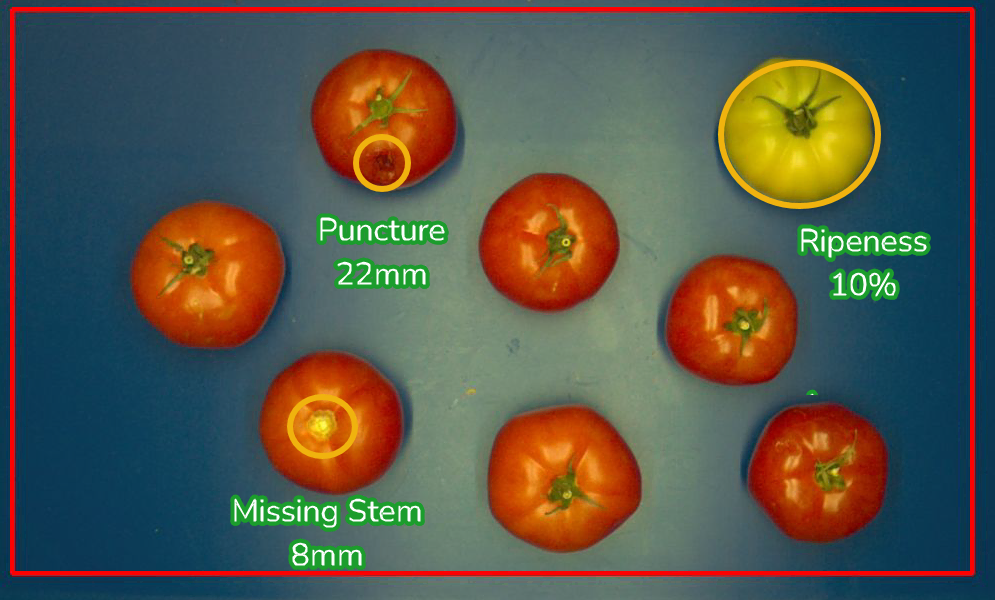
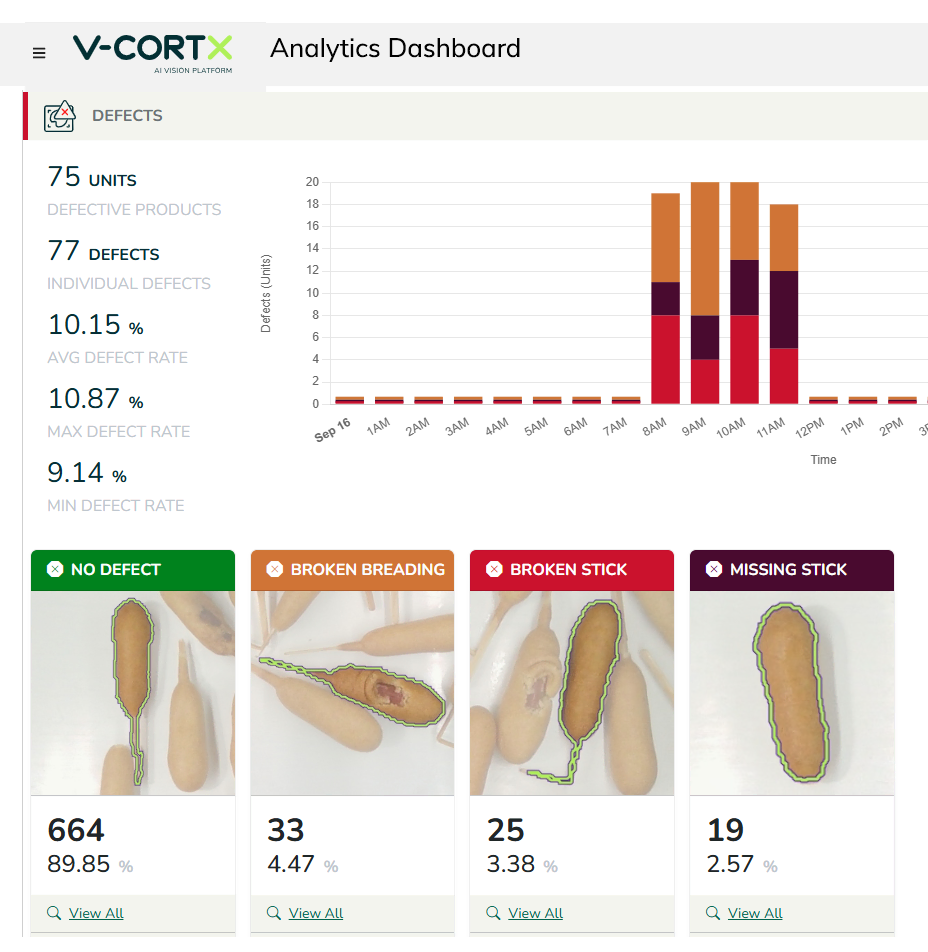
Analytics Dashboard
Gain visibility into defects, trends, and production performance. Teams can trace issues back to specific lines, shifts, or timeframes, enabling faster root-cause analysis and continuous improvement.
These tools empower not just automation, but smarter operations that seamlessly integrate with robotics for robotic guided picking as well.
Leading the future of food safety
The USDA’s push toward innovation signals a broader industry shift: food safety will increasingly be driven by technology, not just labor.
Manufacturers who adopt Visual AI today are not just solving inspection challenges, they’re positioning themselves as leaders in safety, quality, and operational excellence.
With solutions like V-CORTX, food safety becomes proactive instead of reactive:
- Defects are caught before they leave the facility
- Recalls are avoided, not managed
- Quality becomes consistent, not variable
The result is clear: stronger food safety, higher yield, recall avoidance and measurable ROI.
As the industry evolves, the question isn’t whether AI will play a role in food safety. It’s who will lead the transition.
Let Oxipital AI show you what Visual AI can do for your existing or new automation systems.